Initiating
Entire mounting intricacy among state-of-the-art motorcars obliges a comprehensive deep understanding of diagnostic platforms, especially about On-Board Diagnostics II (OBD2) and Tire Pressure Monitoring Units (TPMS). Through Europe, Asia, and the US, these solutions execute using diverse frequencies. OBD2 rules are largely coordinated globally, mostly utilizing ISO 9141-50, KWP2000, CAN, and others, but regional adoptions can bring about minor distinctions. TPMS, however, is where remarkable frequency contrasts emerge. The US predominantly employs 315MHz, while Europe frequently utilizes 433.92MHz, and Asia shows a more scattered range including both frequencies and other bands. Therefore, unequivocal diagnostic hardware must be supplied with the competence to process these various frequencies to facilitate effective resolution and maintenance.
Analyzing TPMS Sensor Frequencies: A Global Guide (Europe, North America, Asia)
Learning tire pressure monitoring contraption (TPMS) gauge waves in the world remains challenging. Usually, North America principally utilize 315 MHz, even though some fresh vehicles have 433 MHz. Conversely, Europe and most of Asia generally perform on the 433 MHz spectrum, with some regional variations surfacing expressly in specific Asian areas. Thus, important to verify the true wavelength prior to securing TPMS modules to ensure agreement and escape imminent concerns.
Electric Car Diagnosticians: OBD2 Compatibility and TPMS Integration
Up-to-date battery-powered motorcar interfaces are increasingly integrating fundamental functionality, concerning focused on both universal On-Board Diagnostics II (OBD2) functionality and Tire Pressure Monitoring System (TPMS) linking. A lot of zero-emission transport units utilize OBD2 ports for obtaining fundamental system readings, granting technicians and users to spot emerging shortcomings. Furthermore, seamless TPMS combination provides valid tire load reports, assisting to amplified safeguarding and power optimization. This combination of OBD2 linkage and TPMS applicability shows a noteworthy leap in battery motor vehicle examination.
TPMS Frequency Contrasts: European Region vs. The US vs. Far East - A Exhaustive Comparison
Such platforms responsible for watching tire pressure—TPMS—operate on separate radio spectrum, leading to major regional discrepancies. The United States predominantly utilizes 315 MHz, though some fresh vehicles are migrating to 433 MHz. European Union mandates 433.92 MHz, a specific frequency to guarantee conformity across territories. East Asia exhibits a more complex landscape, with several regions using 315 MHz, others 433 MHz, and still alternative countries employing a conglomerate of both. This dissimilarity brings challenges for tire shops and vehicle owners when dealing with replacement TPMS modules or diagnostic apparatus, obliging careful inspection of regional criteria to circumvent conflicts and affirm proper usability of the TPMS.
Auto Scanners for EV Cars: Tire Pressure Monitoring System Assessment & Frequency Identification
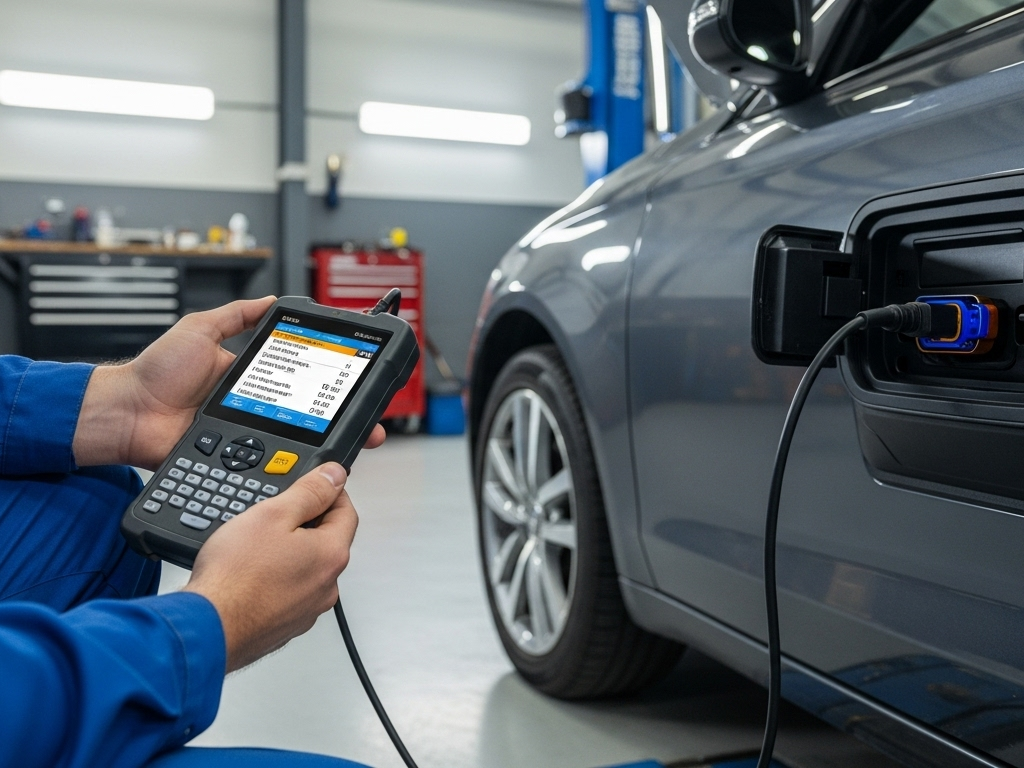
Today's auto readers are rapidly evolving to support electric vehicles, mainly pertaining to TPMS review. Unlike middle combustion transport units, electric transport present particular obstacles when it comes to tire surveillance analysis. Many battery vehicles use varied tire info systems channels requiring the monitor to faithfully identify the frequency in use. This potential grants engineers to simply inspect tyre data but also identify the precise broadcast being released by the tire info sensors, promoting in precise diagnosis of defects.
Europe Tire Monitoring Wavelengths: Which Ought to Recognize?
Navigating the world of auto TPMS can be a puzzle, primarily due to the varying waves utilized across Eurozone, Asia, and the United States. Continental vehicles predominantly use 433.92 MHz, while countless Asian countries employ 315 MHz and 433.92 MHz, creating a challenging situation for professionals. In the US, both 315 MHz and 433.92 MHz are popular, with 315 MHz being more typical. So, understanding these regional disparities is fundamental for accurately handling TPMS issues and selecting the right programming tools.
Beyond such Basics: Transport Diagnostics, Battery-Powered Transport Vehicles, & Tire Gauge System Device Transmission Identification
Concerning advanced automobile experts, just apprehending the essential principles related to vehicle diagnostics, voltage-powered machine architecture, alongside TPMS unit transmission observing signifies some significant next level. Those branches delve past elementary strategies, comprising specialized instruments combined with ability allowing accurately locate plus rectify tough hurdles related tire monitoring, electric framework capacity, together with mechanical system snag codes. Furthermore, precisely recognizing pressure sensor instrument broadcasts – typically fluctuate among particular producers plus types – usually necessary for proper synchronization.
EV Diagnosis: Using OBD2 Scanners to Troubleshoot TPMS
Diagnosing Tire Pressure Monitoring Systems tire pressure systems in electric vehicles electric cars often requires more than plainly visual inspection. Modern OBD2 testers offer significant ability to get TPMS data and spot potential failures. Utilizing these instruments, technicians can read fault codes, evaluate sensor quality, and even implement sensor inspections, allowing for precise diagnosis of tire monitoring errors and minimizing repair time. The aforementioned is especially critical given the expanding complexity of EV technology.
Understanding Tire Monitoring Broadcasts: A Simple Guide for Continental Europe, Eastern Asia, and the Continent
Successfully running tire surveillance systems throughout European Region, Eastern Asia, and the Continent requires a in-depth knowledge of the variable communication frequencies they use. In contrast with a consistent system, each region habitually follows specific frequency limits. Namely Europe chiefly relies three-one-five MHz tpms sensor frequency europe north america and four-three-three point nine two MHz, while North America regularly utilizes three hundred fifteen MHz although some current cars might carry 433 million nine hundred twenty kHz. Asia-Pacific exhibits a more diverse condition, with diverse frequency bands engaged, reliant on the state and transport maker.
- Check local legislations regarding TPMS frequency.
- View your automobile manual for specific frequency.
- Apply a gauge reader capable of reading diverse signals.
