Initiating
From any manufacturing angle, diatomaceous earth and screening medium represent each indispensable component in many operations across each vast range of areas. Research indicates that stable performance necessitates understanding the particular qualities of the compound – its grain diameter, porousness, and flow rate. Tailoring these determinants is crucial to attaining desired cleanliness and performance in the screening method. Over and above that, administering airborne dust is a significant consideration for worker safety and environmental regulations.
Finding the Right Diatomite Filter Aid Supplier
Finding a credible diatomite distributor for filtration tasks can significantly affect product consistency and production effectiveness. Investigate attributes including material rank, size distribution, inventory, tariffs, and client handling when choosing. Avoid ignoring engineering proficiency and delivery potential – an excellent provider supplies more than mere products. Ultimately, building a strong relationship with a qualified diatomite filter aid company will benefit your long-term success.
Diatomaceous Earth: Alternative Uses Beyond Filtration
Though commonly understood for its function in filtering operations, DE holds remarkably extensive further uses. Apart from liquid markets, this sedimentary compound proves useful in landscaping, serving as a safe deterrent and nutrient source. Moreover, its distinctive absorbent texture renders it useful in livestock nutrition, assisting gut function. Consumers observe this compound in personal care items acting as a gentle abrasive or desiccant enhancer. Fundamentally, the breadth of DE continues to astonish practiced analysts.
- Cultivation
- Animal Feed
- Beauty
Controlling Quality in Diatomite Aid Processing
Guaranteeing dependable product quality in filter aid processing calls for thorough inspection routines. Such surveys start at the initial element, embracing review of grain range, porousness, and moisture status. Across grinding and firing phases, regular testing for color, apparent density, and fluidity is vital. Finalized compound lots receive detailed evaluation based on agreed-upon procedures, regularly involving particle measurement through optical diffraction and area assessment.
- Authentication of impurity-free status is vital
- Frequent evaluations of apparatus occur
- Accountability of components is secured
Universal Diatomaceous Earth Trade: Patterns and Vendors
The global siliceous earth market is presently expanding remarkably sparked by surging requirement in many industries. Significant patterns involve increasing implementation in screening tasks, agricultural pest suppression, and as moisture-absorbing agents. Various top firms persistently fund development projects to augment material quality and extend distribution. Notable businesses like EP Minerals, Imerys, Grant Prideaux have a vital part determining the landscape of siliceous earth sector.
Selecting a Diatomite Filter Aid: Factors to Consider
Upon choosing celite filtration substance for your project, major factors demand inspection. The particle scale diversity is significant, markedly impacting separation speed and lucidity of the processed solution. Review the purification device's strain capacity; coarser models work well under reduced forces, while finer grades withstand intensified stresses. Moreover, the celite's cleanliness and diatomite filter aid supplier loose density affect usage properties. Finally, scrutinize price and accessibility of assorted types to boost filtering results.
- Grain Dimension Distribution
- System Pressure Capacity
- Cleanliness and Thickness
- Price and Supply Accessibility
Ethical Harvesting of Silica Earth
Affirming lasting viability in diatomite mining calls for a committed responsibility to sustainable sourcing protocols. Formerly, diatomaceous earth mining created ecological issues including biodiversity imbalance and liquid exhaustion. Henceforth, forward-looking vendors integrate measures alleviating those effects. This includes reclaiming mined land, conserving water, and supporting local communities. Moreover, ethical procurement could involve verifications by third-party bodies, proving compliance with rigorous ecological guidelines.- Stress on ground recovery
- Lowering water use
- Supporting local development
Clarifying Agent Material: Elevating Filtration Capacity
Diatomaceous powder acts as a filtration support, significantly advancing separation capacity in many commercial processes. The finely milled earth creates an open layer on filtration mesh, facilitating removal of particulate matter from liquids. Consequently, clarity is improved, and the overall process becomes more effective.Knowing Silica Earth and Manufacturing Details
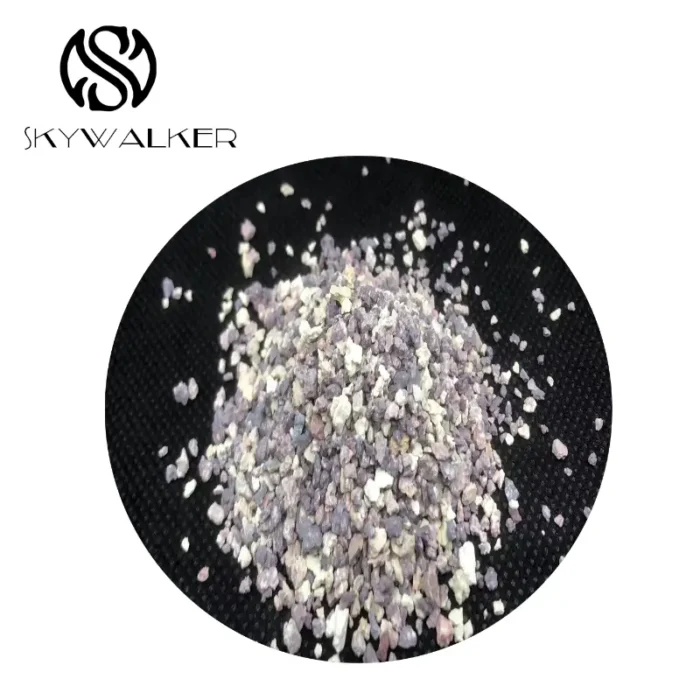
Siliceous earth, alternatively called white powder, constitutes sedimentary material formed from remains of tiny algae. Its unique structure provides exceptional absorbent qualities|Its distinctive composition delivers remarkable filtering properties|Its specialized makeup grants outstanding abrasive features|Its characteristic formation offers extraordinary absorbency traits|Its individual configuration yields superior filtering abilities|Its peculiar composition presents exceptional abrasive qualities|Its exclusive structure affords outstanding absorbent features|Its special makeup supplies remarkable filtering properties}. The manufacturing of diatomite begins with mining from open-pit mines|The production of siliceous earth starts with extraction from surface quarries|The processing of diatomaceous material initiates with excavation from open deposits|The fabrication of silica sediment originates with mining at surface pits|The creation of diatomite commences with quarrying from open-pit sites|The synthesis of siliceous material starts with surface mining|The making of diatomaceous earth begins with excavation of open deposits|The formation of silica earth starts with quarrying surface mines}. The raw material is then crushed and washed to remove impurities|The unprocessed substance is subsequently broken and cleaned to eliminate contaminants|The crude product undergoes grinding and rinsing to discard debris|The natural material is pulverized and cleaned to reject impurities|The unrefined matter is crushed and washed to clear contaminants|The original compound is ground and cleansed to eradicate debris|The raw component is broken down and rinsed to remove impurities|The crude sample is pulverized and cleaned to eliminate contaminants}. Following washing, material undergoes drying to reduce moisture content|After cleaning, substance experiences evaporation to lessen dampness level|Post rinsing, product endures heat treatment to decrease water amount|Following cleansing, compound passes drying phase to cut down moisture presence|After washing, material goes through evaporation process to lower dampness content|Post cleaning, matter undergoes heating phase to reduce water level|Following rinsing, product experiences drying step to minimize moisture amount|After purification, substance passes heat treatment to decrease water presence}. Finally, it is milled into various sizes to meet application needs|Ultimately, it is ground into different grades to satisfy diverse demands|Concluding, it is pulverized into specific ranges to fulfill usage requirements|Eventually, it is milled into assorted distributions to accommodate different uses|In the end, it is ground into multiple sizes to adapt to application specifications|Finally, it is pulverized into varied grades to meet demand characteristics|Ultimately, it is milled into distinct ranges to fit use requirements|Eventually, it is ground into assorted distributions to conform with application needs}.