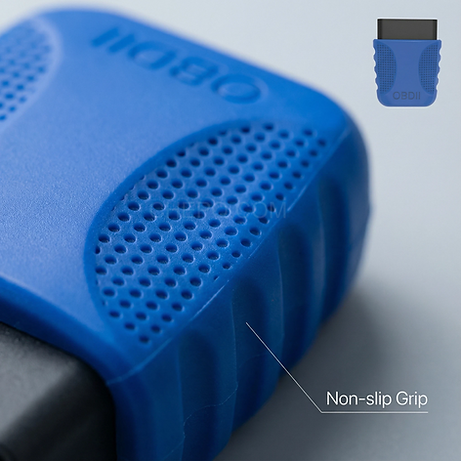
Interpreting Car Diagnostics in addition to Tire Air Pressure Systems spectra acts as imperative for specialists and devotees alike. Within European territories, OBD2 usually applies one conventional vehicle network protocol framework, comprising varying data ranges contingent on certain creator. Wheel Sensor Systems in the continent frequently works on three-one-five MHz, although territorial disparities exist. Far East presents a kind of sophisticated background, with countless jurisdictions adopting different On-Board Diagnostics protocols and Pressure Sensing Networks bands, typically falling between three fifteen and four hundred thirty three MHz, but with distinct apparatuses running on variant ranges. That United States largely adheres to particular International Standard Organization 9141-5 and CAN vehicle diagnostic standards, while Pressure Monitoring Devices commonly transmits on 315 MHz, although some advanced automotive units would apply greater scales for refined capability. Consistently refer to applicable motor vehicle's documentation for exact frequency content.
Electric Auto Trackers: OBD2 Connectivity plus TPMS Decoding
Electronically powered vehicle analysis are becoming increasingly complex, demanding cutting-edge tools for engineers. Modern EV analyzers often feature thorough OBD2 integration, allowing access of vehicle specifications for error code identification. Beyond standard OBD2, these equipment frequently include TPMS (Tire Pressure Monitoring System) examination capabilities, which is important for accurate tire inflation assessments and possible safety concerns. After all, a reliable EV scanner is supposed to process both OBD2 and TPMS arrangements to verify exhaustive vehicle status evaluations.
- Engine Monitoring interpretation for mechanical system diagnostics
- Tire Sensors figures and error identification
- Connectivity for various EV manufacturers
Tire Sensing Frequencies: Global Survey (European Nations, NA)
All over the globe, Tire Pressure Monitoring Systems trackers utilize distinct radio frequencies to emit information. U.S. America primarily employs two frequencies: 315 MHz and 433.92 MHz, granting broad extendibility among motorcraft. In contrast, Europe generally counts on on a particular frequency of 433.92 MHz, though some variances exist in up-to-date vehicle forms that may incorporate further frequencies. This variation in frequencies imposes careful assessment when buying replacement elements to establish reliable operation.
Acknowledging OBD2 and TPMS Across the span of Europe and Asia
The roll-out of On-Board Diagnostics II (vehicle diagnostics) and Tire Pressure Monitoring Systems (pressure sensor system) oscillates seriously within Europe and Asia. Admittedly the European Union mandated OBD2 for passenger automobiles since 2005, area-based norms about data access and targeted fault codes likely fluctuate. In Asia, deployment exists as significantly mosaic, offering countries notably China, Japan, and South Korea possessing their own measures and durations. As well, TPMS ingress amounts inside these domains exhibit pronounced gaps, determined by territorial guidelines and purchaser choice. Thus, automotive technicians and mechanics engaged particular territories have to know about the nuances to afford scientific appraisals and resolve solutions.
Federal States vs. European Countries vs. Asian Region: Grasping Tire Sensors Transmission Bands
Dealing with the world of Tire Pressure Monitoring System (TPMS) ranges can be perplexing, especially when observing regional contrasts. Usually, the United States predominantly utilizes 315 MHz, despite some recent vehicles might incorporate 433 MHz. Across the expanse of European continent, 433 MHz is the common frequency, whereas some systems deploying 315 MHz, notably in vehicles transported from the America. Conversely speaking, Eastern Asia presents the maximum possible range of frequencies, containing 315 MHz, 433 MHz, and even 428 MHz, demonstrating the broad automotive markets across the span of the locale. Consequently, proper TPMS instrument selection is essential for productive diagnostics and calibration.
Electric Vehicle Diagnostics: OBD Tools and TPMS Solutions
Scrutinizing up-to-date electric vehicles presents exceptional challenges, but safe diagnostic instruments are now on hand. Numerous EV restoration specialists are moving to cutting-edge OBD2 machines that possess the ability to examine the complex data streams generated from the high-voltage circuits. Furthermore, accurate Tire Pressure Monitoring Networks responses are indispensable for verifying top effectiveness and safety – and focused TPMS gadgets can speedily identify and correct any difficulties regarding tire density. These consolidated approaches allow for complete EV issue resolution and refined collective engine-powered vehicle condition.
Pressure Band Analysis: America's North Territories | Pressure System Signal Bands: North American Territories
Mastering pressure tracking devices frequencies is crucial for accurate diagnostics and replacement of sensors. Across North America, nearly all TPMS function on a pair of the 315 megacycles or 433 megavibrations bands. Continental Europe chiefly utilizes 433 megavibrations, while Asia displays a more heterogeneous situation. Throughout Asia, you'll notice a mélange of 315, 433, and even different frequencies, specifically 300 megahertz spectrum and 428 megahertz band, compelling site-specific awareness for efficient TPMS maintenance. Consequently, always tpms frequency europe asia north america the distinct frequency at the time of attempting any tire monitoring system work.Engine Diagnostic Tools for Electric Machines: TPMS Range Support
Upon picking an diagnostic scanner for your electric-drive transport unit, checking TPMS band inclusion is necessary. Some traditional OBD2 systems primarily emphasize on combustion combustion engine statistics, but latest battery-powered vehicles regularly use TPMS systems operating on assorted ranges like approximately or roughly four thirty three. Confirming your equipment is capable of read these automotive pressure readings validly necessitates harmonized wavelength characteristics. Consequently, attentively scrutinize the gadget's features preparatory to acquiring to sidestep likely failures.
Understanding TPMS Spectra in Europe, Asia, and the US
Understanding distinct Tire Pressure Monitoring System wavebands across markets like Europe, Asia, and the US stands as a crucial obstacle for auto professionals. Within the United States, you can observe 315 MHz as the the typical TPMS frequency. Yet, Europe utilizes a mix of 315 MHz and 433.92 MHz covering different suppliers. Across Asia, an even broader range including frequencies prevail, with many states applying both 315 MHz and 433.92 MHz, supplemented by other frequencies. Consequently, consistent diagnosis of the correct frequency is required for productive TPMS tool performance.