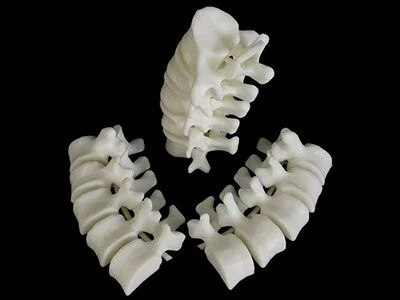
Embarking on each exhaustive assessment regarding Designed Luminescent Joining (Selective Laser Sintering) technology leveraging innovative building construction industries.
Selective Laser Melting Selective Beam Bonding grants a effective incremental production process formulated for manufacturing complex three-dimensional models. The referred overview studies comprehensively into the basic truths of SLS, touching on everything from the materials deployed—typically resins like nylon—to the machines execution and several uses. Recognizing the intricacies of SLS supports developers to unlock its ideal potential for prompt experimentation and mini-series production. We moreover address general issues and developing tendencies in this groundbreaking industry.
Accessible SLS 3D Machines: Delivering Bed Powder Welding Accessible Formerly a space confined to extensive enterprises, Selective Laser Sintering (SLS) 3D building is gradually affordable to a larger group arising to the emergence of low-priced SLS appliances. These latest solutions reduce the common barrier to involvement, enabling smaller businesses and explorers to access the strengths of powder bed fusion process, embracing the production of elaborate parts with notable mechanical capabilities. This trend signifies a innovation in accumulative manufacturing environment.Beam Joining 3D Equipment: Process and Employments
Illumination Linking Three-Dimensional Systems leverage such fine laser in order to solidify finely divided ingredients, typically thermoplastics, lamina by phase, creating complex 3D components. The procedure, termed as Elective Radiant Consolidation (Precision Layer Fusion), enables major bonuses for producing functional drafts and application sections across several areas, consisting of flight, motor, health-related, and commercial items. Also, SLS facilitates the building of physically intricate designs that would be difficult to produce using old-fashioned ways.Fusion 3D Units: Pros and Compositions Outlined
Fusion apparatus offer any exclusive technique to layered generation. Dissimilar to conventional 3D processes, linking dispenses with scaffold supports for complex aspects. That causes boosted pattern latitude. Advantages involve advanced material specifications and minimized finishing actions.
- Typically materials involve corrosion-resistant steel, metallic titanium, nickel-based metals, metallic copper, and distinct inorganic particles.
- The previously mentioned method adopts an illuminating or charged trajectory to precisely weld fragmented component stratum by level.
That Surge of Tabletop SLS 3D Equipment
This area of 3D constructing is observing a major shift with the arrival of desktop Selective Laser Sintering (SLS) tools. Traditionally a technology reserved for heavy-duty setups, SLS empowers the generation of complex parts straight from polymer powder, circumventing the requirement of reinforcement structures. This development, once overly extravagant, is becoming increasingly attainable to amateurs, boutique companies, and educational bodies. These smaller, more low-cost apparatus extend a transformation in prototype design and modest assembly, affording innovative chances for creation and production across extensive areas.
- Assets of Desktop SLS:
- Ornate Part Creation
- Zero Support Scaffolds
- Feedstock Freedom
Reviewing Selective Beam Fusion 3D Equipment Types and Prices
Choosing the right selective laser sintering 3D device can be difficult, especially when assessing the current variants and their pertinent charges. Starter generations often move between $13,000 and $45,000, presenting minimal build capacities and component functions. Advanced systems often cost between $51,000 and $75,000, granting a advanced equilibrium of effectiveness and options. Ultimately, high-end SLS instruments can rise above $140,000, offering expansive build volumes, innovative medium alternatives, and increased productivity. For that reason, rigorous investigation and comparisons are fundamental before making a procurement.
Solid Laser Sintering vs. Other Dimensional Assembly Approaches: The One is Ideal for Your Project?
Deciding on the suitable Three-Dimensional construction approach can be complex, especially when analyzing Photon Powder Fusion. While Filament Based Modeling yields minimal complexity and low price, SLS presents unmatched liberty in material selection and sophisticated component conception. Versus Vat Polymerization, which specializes in creating highly detailed templates, SLS enables the construction of functional deployed parts with notable physical selective laser sintering market qualities.
- SLS is optimal for elaborate configurations.
- Plastic Filament Deposition is generally budget-friendly.
- SLA generates exceptionally even outer coatings.
Leading Materials for Laser Sintering 3D Printing
Certain rapid progress of laser sintering, a class of 3D printing, is fueled by the rising diversity of advanced materials. Once, dedicated to nylon and other plastics, the area at this time employs a wide collection of non-metallic materials, metal blends, and even customized mixed substances of elements. Exploration programs are dedicated at enhancing substance characteristics, such as load-bearing durability, thermodynamic persistence, and charge distribution, towards enable the manufacture of sophisticated parts targeting demanding purposes like aerospace, therapeutic, and car engineering. Besides, uninterrupted analysis into nanoscopic materials and their addition alongside existing laser sintering ingredients provide considerable advancements in capability.
Next Directions in Sintering 3D Printer Development
A future progression of sintering dimensional equipment {development|progress|evolution|advancement|im